Priscilla Hennekam
Released 5 Aug, 2025
This wasn’t a planned newsletter. It’s not part of the editorial calendar, and I didn’t sit down to write it because I had a strategy or a topic lined up. It came from that familiar feeling, the one that doesn’t ask for permission. It just shows up and says: Write.
Not for reach. Not for clicks. But because something landed so clearly in me that I couldn’t ignore it. And maybe, just maybe, someone else out there needs to hear it too.
This weekend, I was thinking about the kinds of things we rarely talk about publicly, not trends, not tactics, not “what’s working”. A thought I didn’t really want to sit with… but couldn’t ignore:
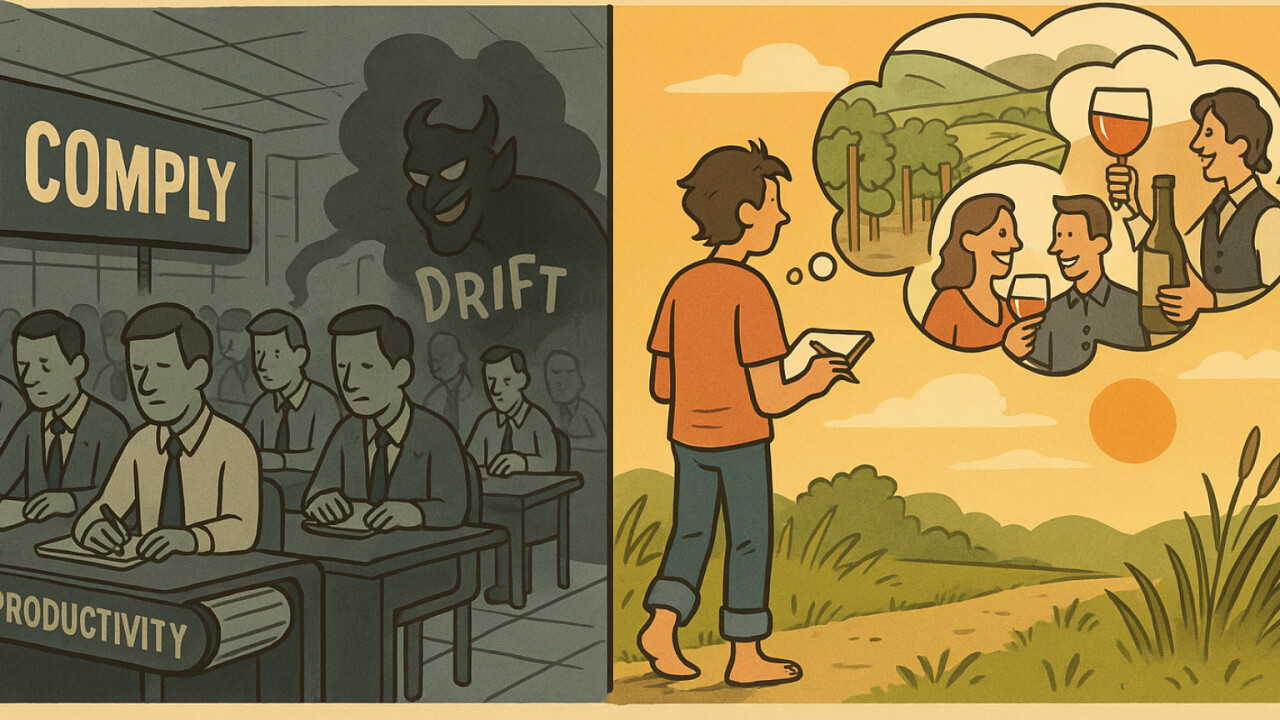
Most systems collapse because people stop thinking. They memorise instead of questioning. They follow the script. They trade curiosity for compliance. Not because they’re lazy. But because the system rewards repetition over reflection.
And over time, that repetition becomes alienation. People forget why they started. Institutions forget who they serve. And slowly, silently, we drift into autopilot.
This weekend, I listened to a book called 'Outwitting the Devil’ by Napoleon Hill. Written in 1938 and locked away for over 70 years because it was considered too controversial, it was finally published in 2011.
The premise is uncomfortable. Hill imagines a conversation with the “Devil”, who reveals that his greatest weapon is drift.
Drift is what happens when people stop thinking for themselves, when they move through life without questioning.
This Newsletter is an invitation to pause, reflect, and take a closer look at the patterns we’ve come to accept as normal. What parts of our industry are built on drift? What rituals no longer reflect the people we serve? What truths are we avoiding because they threaten the comfort of tradition?
We can’t build what’s next if we’re still sleepwalking through what was. And maybe, just maybe, the industry we actually want is waiting for us on the other side of the conversation we’ve been avoiding.
The Pause Is Over. The Real Work Begins.
We’ve resolved the legal hurdles. The contracts are signed. The team is locked in. Now, it’s time to build what the wine world actually needs, and we’re inviting you to be part of it from the ground up.
Rethinking.Wine is a new system, built on data, powered by community, and guided by expertise. We’re creating something the industry has never seen: An intelligent, decentralised space where people connect, learn, and grow, through shared value and collaboration.
And the best part? It gets stronger with every person who joins. If you believe wine deserves better than the same old institutions, now is the time to act.
Leave your email here: Rethinking Wine and be part of our community. Shape the future. Join a global community from 80+ countries already #rethinking what’s possible.
The old playbook is done. We’re building what comes next.
It Started With a Sentence I Can’t Forget
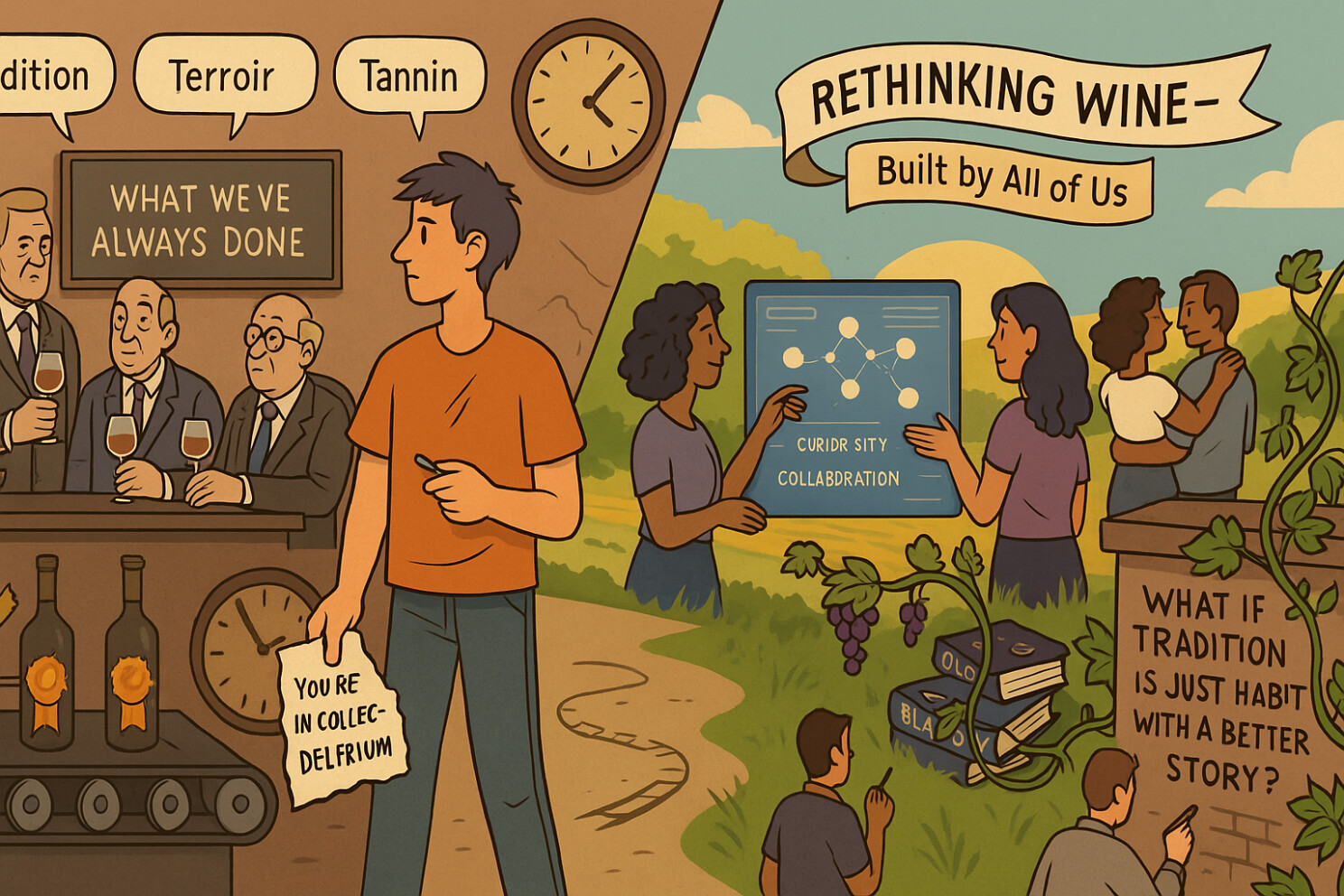
Last year at ProWein, I shared a taxi with someone from outside the wine industry. He was building a winery, but came from a completely different sector. And at some point during our conversation, he turned to me and said:
“You guys in this industry… you’re in collective delirium”
I felt it. Deep.
When I got to the hotel, I reached for paper and pen. I spent three hours writing non-stop.
We’ve been repeating patterns for so long that we’ve forgotten they’re even patterns. We’ve normalised the same way of doing, thinking, selling, and communicating - even when the world around us has changed completely.
And maybe it’s not because we’re blind. Maybe it’s because we’re tired. Or scared. Or stuck in habits that once served us, but now keep us small.
We’ve Been on Autopilot For Too Long
There’s a concept in 'Outwitting the Devil’ that really stayed with me. He calls it “hypnotic rhythm”. It’s what happens when you repeat the same things so often that you stop noticing you’re doing them. Your thinking becomes mechanical. Your creativity shrinks. Your curiosity dims. And one day you realise… you haven’t made a real choice in years.
Sometimes we do it in the name of tradition. But what if what we’re calling tradition is just habit?
It’s the way habits, when repeated often enough, take over our thinking. You don’t question. You don’t reflect. You just repeat. And before you realise it, you’re no longer choosing, you’re just continuing.
That, to me, describes a big part of the wine industry right now.
We speak in familiar language. We rely on what’s already been validated. We hesitate to break patterns - not because they’re perfect, but because they’re safe.
But safety isn’t always wisdom. Sometimes it’s just fear in a nice outfit. And I wonder how much of what we call tradition is actually just habit, passed down, reinforced, never questioned.
Have we stopped thinking about whether it’s still right? That’s where I think a lot of the wine industry finds itself now.
We’re following inherited scripts. Reinforcing legacy structures. Avoiding discomfort in the name of tradition, when maybe what we’re really avoiding is uncertainty. But there’s a difference between honouring what came before us and being held hostage by it. And the only way we’ll know which one we’re doing is if we pause and reflect.
We’ve been taught that expertise means certainty. But in a world changing this quickly, maybe expertise means humility, curiosity, and adaptation.
Not knowing everything, but being willing to unlearn what no longer serves.
I’ve Been Thinking About “Failure”…
Failure gets treated like the end of something. But the more I live, the more I see it differently.
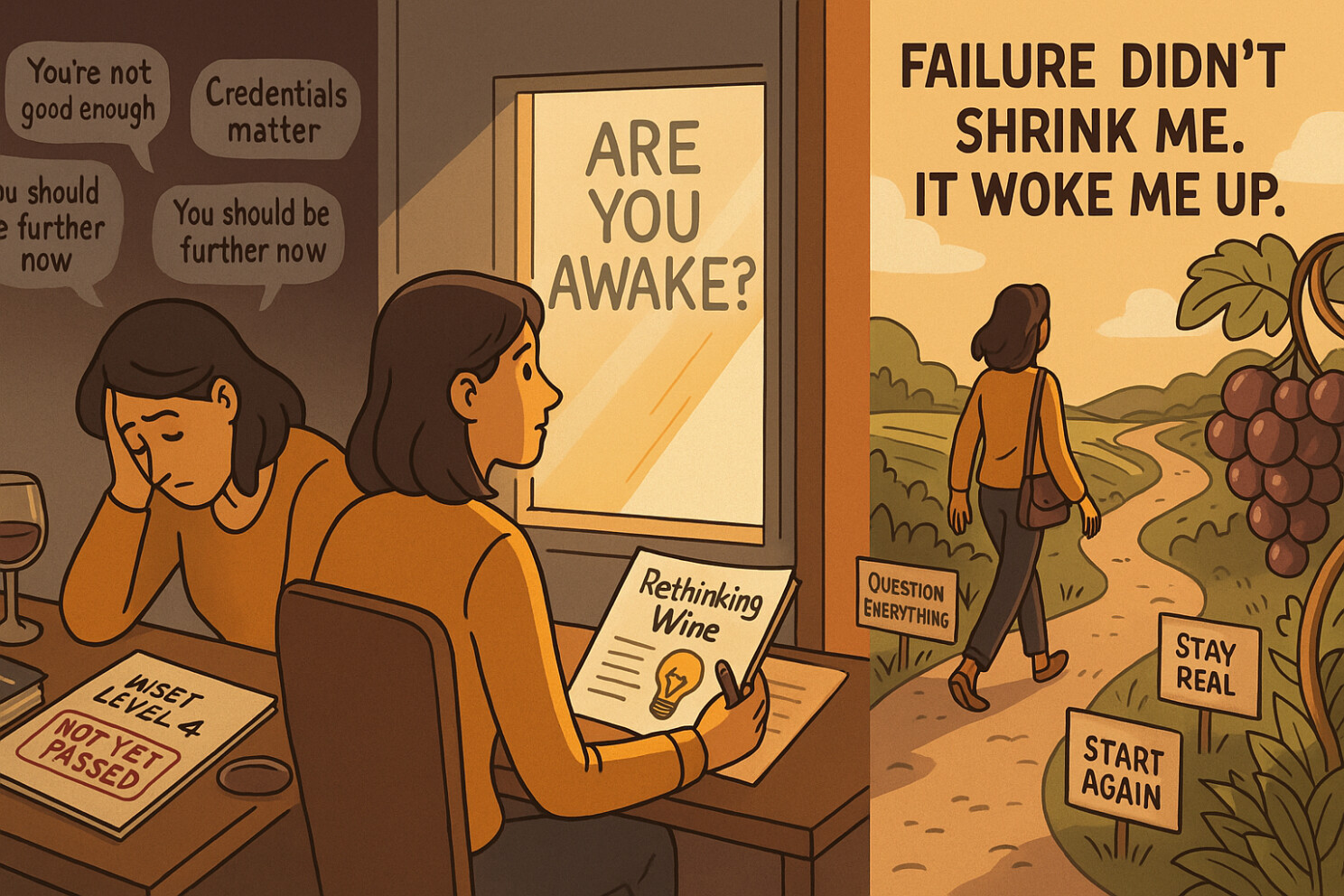
Sometimes failure is just life asking: Are you awake?
One of the biggest posts I ever shared on LinkedIn wasn’t about success. It was about failing my final WSET Level 4 exam.
That post took a lot out of me to write. I didn’t want to share it. Because it’s hard to admit when something you worked so hard for doesn’t go to plan, especially in an industry where credentials still mean so much.
But I posted it anyway. Not because I felt brave. But because something told me I needed to. And that moment changed more than I expected.
The failure didn’t shrink me. It woke me up. Until then, I had been walking a path that didn’t quite fit. I was following the steps I thought I should be taking. And for a long time, I didn’t even question it. I thought the problem was me. But failing that exam, it forced me to stop and ask: Is this really the direction I want to go?
And the honest answer was: No.
It’s not always a big dramatic collapse. Sometimes it’s just something not working the way you hoped. A plan falling apart. A market shifting. A launch that doesn’t go anywhere. A conversation that leaves you thinking for days.
But instead of seeing that as “wrong”, I’m starting to see it as the moment where we get to choose again. Failure is feedback, and often, it’s the only thing strong enough to break the mental loop we didn’t even know we were stuck in.
In Outwitting the Devil, Napoleon Hill says that every setback carries a seed of equivalent benefit. But you only find it when you stop fighting the failure and start asking what it’s showing you.
Sometimes failure clears space for something better. Sometimes it reminds you that the plan wasn’t aligned in the first place. Sometimes it just slows you down long enough to reconnect with what matters.
And sometimes, not always, but often, the version of you that comes after is more grounded, more aware, more real.
Stop Copying What Works. Start Surprising People.
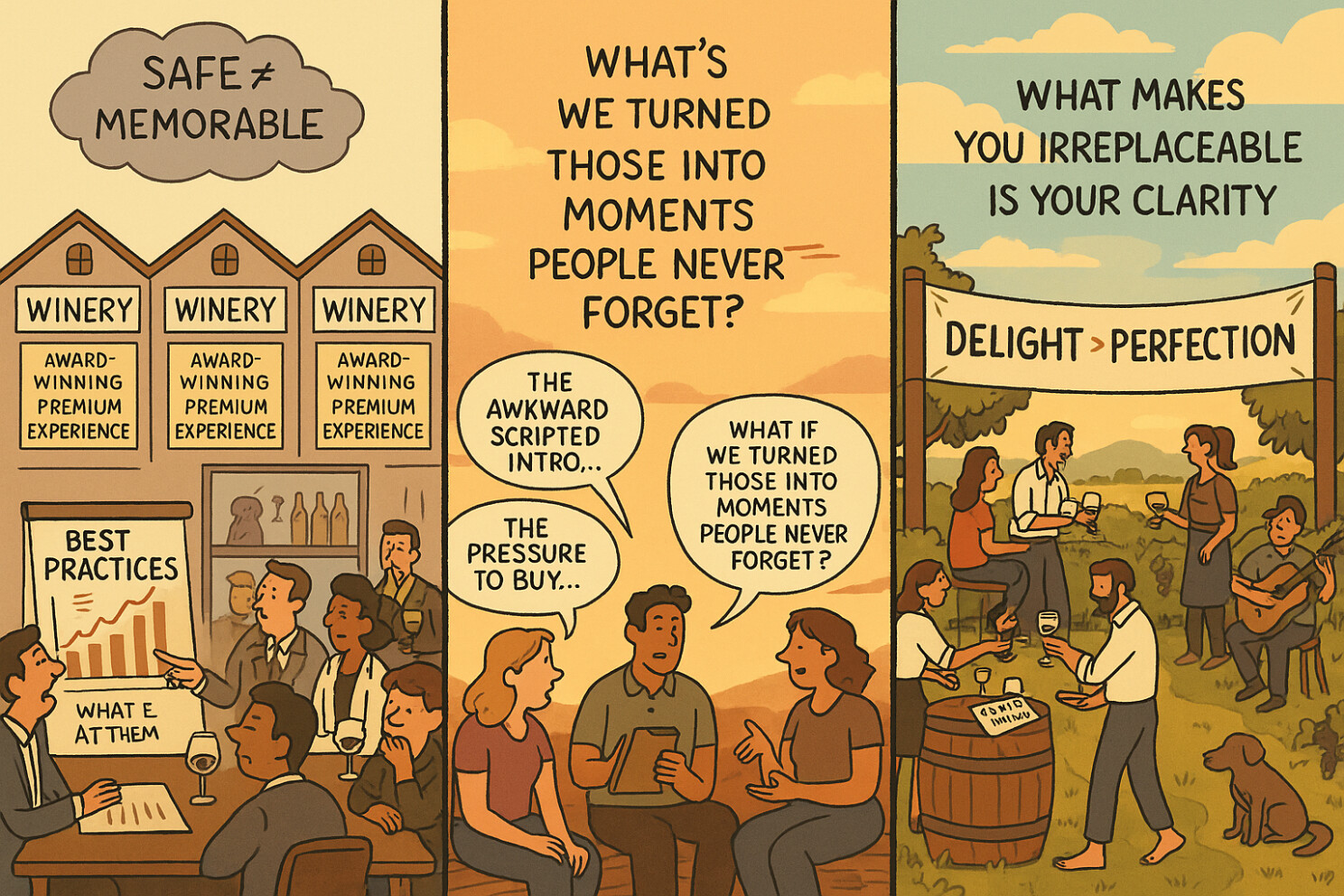
There’s a story in 'Unreasonable Hospitality’ by Will Guidara, the man who helped take Eleven Madison Park from the 50th best restaurant in the world to number one.
Instead of obsessing over what made other restaurants successful and trying to replicate it, he did something different.
He took a cross-section of his team, kitchen staff, front of house, everyone, to dine at the top restaurant in the world. At the end of the night, everyone talked about what impressed them. The quality. The service. The precision.
But Will asked a different question:
“What was slightly disappointing?”
Not to criticise. But because he understood something most people don’t: Your edge isn’t in what your competitors do well. It’s in what they miss and what you’re bold enough to make unforgettable.
Now imagine this applied to your winery or wine business.
Most brands obsess over what the successful neighbour is doing. But that’s a trap.
When you build by copying what’s already working for someone else, you’re optimising for safety, not creating surprise. You’re blending in, not standing out.
The real opportunity?
Ask your team: What frustrates people about wine tastings? What parts of a winery visit fall flat? What feels awkward, outdated, overdone?
Then take those weak spots, and make them unforgettable. Turn the “just okay” moments into “I never expected that” moments. Turn the overlooked into the overdelivered.
That’s how you create a brand people talk about. Not because you were better on paper, but because you made them feel something unexpected.
Wine doesn’t need more polished perfection. It needs more delightful disruption. More brands willing to double down where others have neglected. More leaders who stop chasing best practices and start crafting their own.
You know that thing you do that feels effortless? That’s your superpower. No one else does it quite like that. And that’s how you become the brand that doesn’t just compete, but completely rewrites what people expect from the experience. Because in a world full of wine, what makes you irreplaceable won’t be your varietals or your awards, it’ll be your clarity. Your commitment to doing your thing, with care, over time, until it becomes impossible to ignore.
Change Isn’t a Disruption. It’s Our Only Certainty.
We often treat change like a threat, something to manage, mitigate, delay. But in truth, change is the only thing that was ever guaranteed.
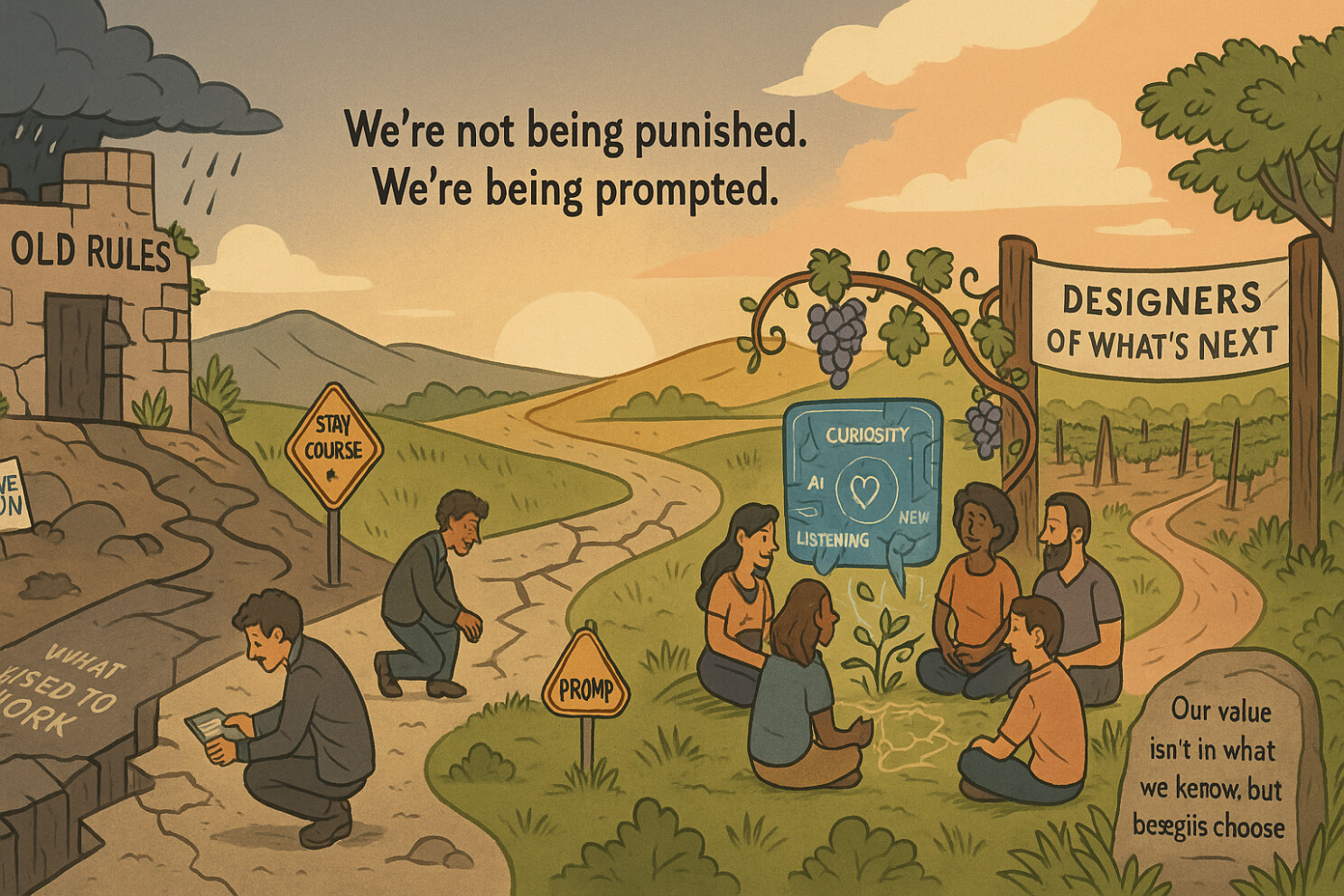
Ray Dalio, writes about how all systems, whether they’re economies, organisations, or relationships, rise and fall in cycles. The collapse doesn’t usually come from one big failure. It comes from confidence breaking, from ignoring small signals for too long, from clinging to patterns that no longer make sense in the new reality. They stop questioning. They over-protect what used to work. They become defenders of legacy rather than designers of what’s next.
And slowly, that protection becomes the risk.
The future of wine won’t be built by those trying to keep the old rules intact. It will be built by those brave enough to ask what wine can mean in a different world, and who it’s meant to mean something to. Those who know that in a world full of noise, the most powerful thing we can do is listen, and begin again, together.
And when we refuse to adapt, we’re not protecting what we built, we’re slowly dismantling it. This moment we’re in, with AI, with generational shifts, with changing values, isn’t an attack on the wine industry. It’s not the enemy. It’s an invitation.
We’re not being punished. We’re being prompted.
Prompted to look around and ask, What are we still holding onto just because it’s familiar? Prompted to notice where we’re more loyal to habit than to meaning. Prompted to let go of what no longer fits, even if it used to fit beautifully.
Because maybe the next version of this industry isn’t built by those who resisted change the longest, but by those who had the courage to meet it with curiosity.
Final thought
We’ve memorised so much in this industry. But maybe now is the time to remember something deeper:
Our value isn’t in what we know. It’s in how we think. How we connect. How we adapt. And most of all, how we choose to begin again, together.
With love Prisci
Click here and be part of our community
Author: Priscilla Hennekam