Chris Howard
Released 20 Jan, 2026
I was speaking with Chris Howard just before Christmas, and I left fascinated with the questions he raised, that quietly expose how often we live on autopilot. That’s why I invited him to contribute in our Rethinking the Wine Industry community newsletter.
Have you noticed that most of us don’t stop to examine our own thinking? We process, we react, we scroll, we repeat what we’ve heard, we defend what we already believe. We call it “analysis”. If critical thinking is simply the ability to process and analyse information, then let’s be honest: AI is already better than we are. It can summarise, compare, list arguments, generate counterpoints, and do it all in seconds. So the real question is:
Are we thinking like machines, or are we thinking like organisms?
That distinction changes everything. It changes how you perceive the world. It changes how you interpret culture. And yes, it changes how you taste wine.
Chris has a way of pulling the conversation back to something most modern wine education skips over: knowing isn’t the same as thinking. You can be highly knowledgeable and still be operating on autopilot. You can memorise regions, repeat tasting grids, collect certifications, and still never truly meet the wine in front of you. Thinking is not how much you know. Thinking is how conscious you are of your own thoughts.
Chris brings an invitation to rethink what tasting even is. As a relationship between your senses, your context, your inner dialogue, and the world you’re tasting.
He says:
“Rethinking wine means shifting from thinking about wine to thinking with wine”.
Thinking about wine keeps wine at a distance. It turns the glass into an object to decode, categorise, and control. Thinking with wine turns the glass into a meeting point. A dialogue. A portal back into the body, into place, into presence. It becomes less about extracting a verdict, and more about noticing what is happening in you as you taste. What you pay attention to. What you ignore. What your culture trained you to perceive as “important”. What language allows you to experience, and what language limits.
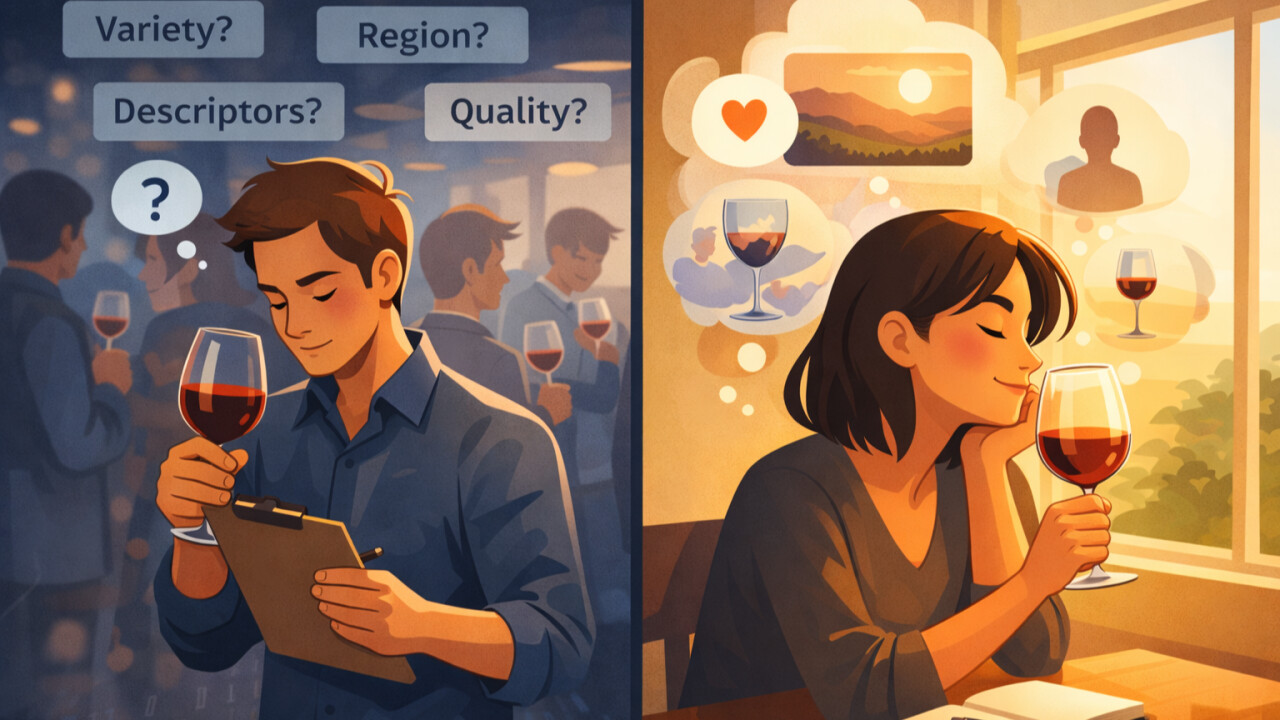
Machine-mode pass (about wine): “What variety is this? What region? What descriptors? What quality? What’s the answer?”
Organism-mode pass (with wine): “Where does my attention go first? What changes after 10 seconds? What emotion appears? What memories or images? What am I ignoring? What does this wine make me notice in my body?”
Same wine. Totally different experience.
So as you read Chris’s piece, I want to offer you one small challenge.
Notice what happens in your mind while you’re reading. Notice where you rush. Notice where you resist. Notice what lands. Notice what makes you want to argue. Notice what makes you go quiet.
Because maybe the future of wine isn’t just about better information. Maybe it’s about becoming better #rethinkers. Chris Howard is an award-winning wine writer, educator, and judge based in Paris. He holds a doctorate in anthropology and previously worked as both an academic and an OECD economist, before returning to wine, his original vocation, in his native Sonoma.
Rethinking the Wine Industry is building the first platform designed to grow two things the wine world is going to need most in the years ahead: adaptability and ideation. A space that helps the industry learn faster, think wider, and respond to change with clarity instead of panic. That’s what we’re creating.
Be a Rethinker, join the community - www.rethinkingwine.app
By Chris Howard
'The most thought-provoking thing about our thought-provoking age is that we are still not thinking.’
The philosopher Martin Heidegger wrote those words in the early 1970s, late in life and after witnessing the untold advancements and atrocities of the 20th century. Oh Martin, if you only knew…
It seems to me the first step toward rethinking wine, and anything else, is to spend some time thinking about thinking itself. I’m not sure anyone can tell us exactly what it means to think thoughtfully, but here’s what D.H. Lawrence declares in his poem ‘Thought’.
‘Thought is a man in his wholeness wholly attending.’
‘Thought is the welling up of unknown life into consciousness.’
The source of that welling up remains mysterious and requires a special form of attention and listening—a certain openness and awareness only possible through a degree of silence and solitude. Such a state isn’t easily reached or maintained in our clamorous, hypermediated world, where the stream of information drowns out the stream of thought.
As we leave more and more of our intelligence to machines, it seems more important than ever to ask: what is thinking? I’ve been reflecting on the matter in general, and specifically in the context of wine while working with the Wine Scholar Guild on their new Tasting Diploma, which makes its debut in 2026.
Unlike any other wine course I’ve seen, and to their credit, the WSG Tasting Diploma begins and dedicates an entire month to critical thinking. Asked to deliver a lecture on the subject, it occurred to me that critical thinking should begin with thinking about thinking.
Most critical thinking courses jump straight to analyzing arguments and evaluating evidence on given issues. But how can we think critically about anything, including wine, if we haven’t first considered what thinking itself entails?
Knowing is not the same as Thinking
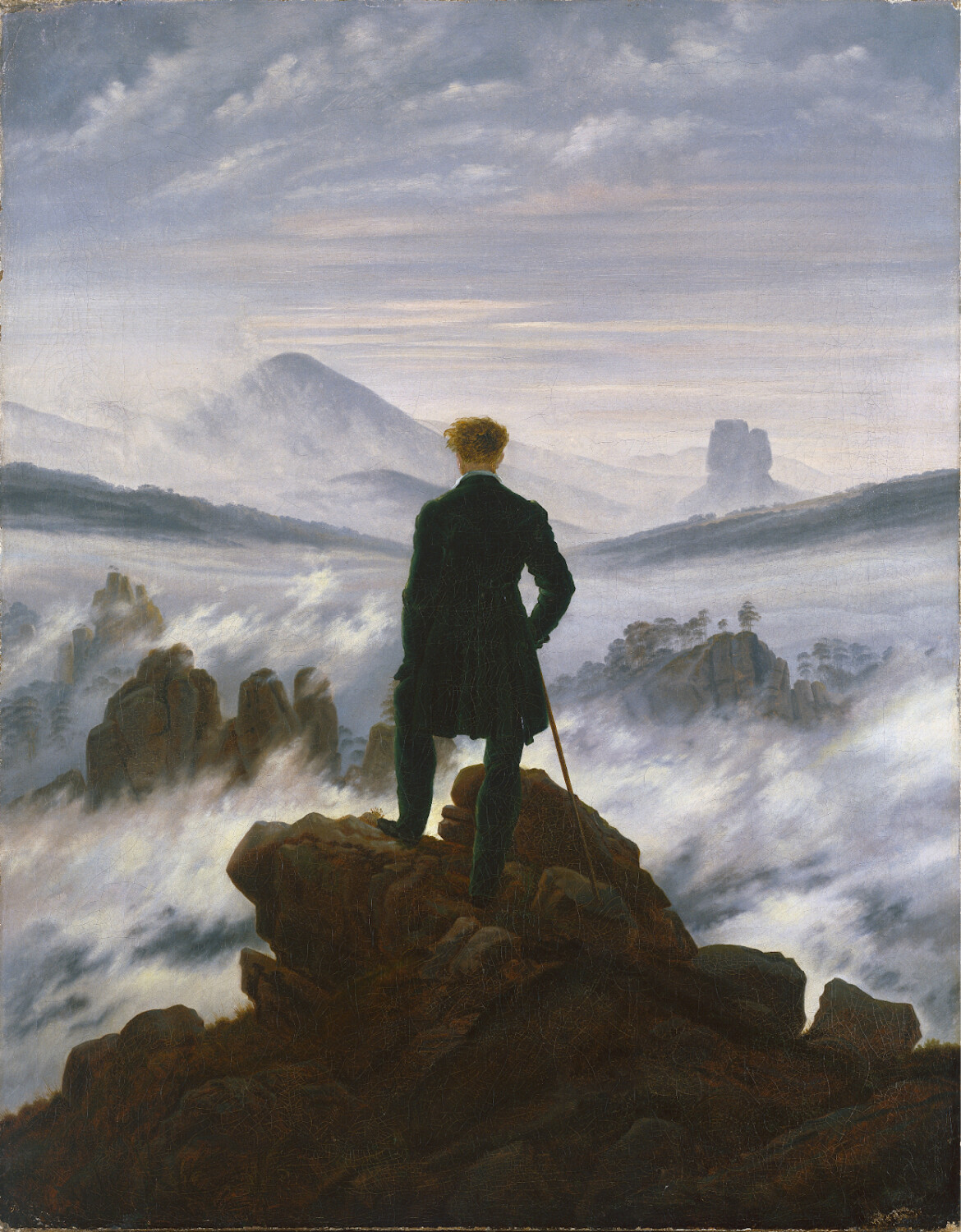
We can be knowledgeable about wine without actually thinking about it. We can memorize facts about appellations, master tasting grids, pass exams and collect certifications—and still operate largely on autopilot. Knowledge is not the same as thought. Information is not intelligence. Earth is not a database.
Thinking, as Hannah Arendt describes it, is ‘a soundless dialogue between me and myself, the two in one.’ It’s an ongoing internal conversation where we question, doubt, find and make meaning. Thinking is innate to all human beings, but like any capacity, it can be practiced and cultivated—or neglected and atrophied.
The aim of wine education shouldn’t be to tell people what to think about wine, but to provide tools for how to think about it. The telos or ultimate aim being people who can think and drink for themselves.
Thinking in Context
We are first and foremost embodied beings. Thinking doesn’t happen only in the brain—it emerges from context, experience, culture, genetics, and environment. We think with our whole bodies, in specific places, at particular times. I am not my brain.
The body is porous and responsive to the world, meaning there is an outer dimension to thinking. An influential theory known as the Extended Mind Thesis posits that consciousness extends beyond the body into the environment. The phone in your hand, the people you encounter, the landscape you move through—these aren’t just external phenomena. They’re part of your cognition. The mind extends out into the world.
Things mingle with each other and we are no exception. We mix with the world which mixes with us.
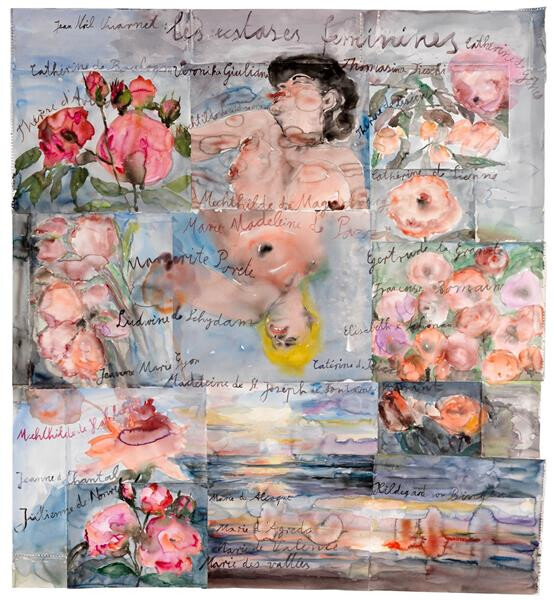
Thinking is contextual and shaped by different environments. When I’m walking in a forest or on a beach, I think differently than in my room or in a city. Similarly, when I taste a wine in the vineyard from which it springs, I think differently than when I taste it in a busy restaurant, or in a lineup of 50 other wines.
The Sense of Thinking
Given that wine is a multisensorial and synesthetic affair, I realized that my ‘thinking about thinking’ lecture needed to address the question: what is the relationship between thinking and sensing?
Since Aristotle, we’ve accepted a clear division: The five senses gather information, while thinking is a separate faculty that synthesizes it all. Aristotle gave spurious reasons for the partition, positing that just as there are five elements there must be five senses. Tidy but terrible reasoning.
Try putting the question to yourself: Why do I think there are only five senses? Contemporary science suggests there are as many as thirty-five.
In The Meaning of Thinking, philosopher Markus Gabriel traces the traditional idea: Sense organs have their proper objects. Smelling is for smells, hearing for sounds, seeing for colors and shapes. Thinking unifies these objects. So if I encounter a wine that looks pale gold and tastes citrusy, my thinking helps me work out what kind of wine it might be.
The idea was that since thinking synthesizes different sense impressions, it cannot be a sense itself. But this is a straight-up non sequitur—a logical fallacy. What if thinking is an additional sense, namely, the synthesizing sense? This is something Aristotle himself explicitly entertained when he coined the concept of ‘common sense’ (koinē aisthēsis in Greek, sensus communis in Latin).
The very idea of common sense, for almost 2,500 years, has been exactly the notion of thinking as a sense. But if smell has scents and seeing has sights, what would the proper object of thinking be? It takes until modernity for the answer to arrive: the proper object of thinking is thoughts!
When we taste wine, we’re not just sensing, perceiving, and then thinking—we’re thinking through our senses the entire time. Which is to say: we’re in contact with the world.
Thinking as Contact
From a scientific, materialist point of view, sensations are nothing in themselves. They don’t ‘know’ any tastes, colors, or sounds. Sensations are vibrations. Science in its objectivity tends to remove the experiencing subject from these physical, biochemical responses.
But before and after that scientific extraction, we are in contact with the world. We should emphasize the word contact, because it means we are in a tactile relation, even if it’s not specifically the sense of touch. From Aristotle onwards, touch has been considered the primary or mother sense.
Consider: Sound waves enter the ear and vibrate the drum. Photons strike the eyes. We sniff a glass of wine and aromatic compounds tingle the nasal receptors. Taste registers the flavors, which are synthesized with aromas, but there’s no taste without touch. Sensing the texture, tannins, acidity, and mouthfeel of a wine is a blend of taste and touch. And as we look, smell, and sip, we synthesize, which is to say, we think.
So to think is to be in contact with something. But we can’t think about and synthesize everything at the same time. We can only ever perceive some things at the expense of others. We don’t realize it, but we are constantly selecting and ordering our worlds. Insofar as it is another sense, thinking also is selective in what it considers, conceives, and strives to understand.
When we taste wine, we are selecting what we pay attention to from an almost infinite array of possible experiences. Language, culture, mood, physiological state, previous experiences, context—all of these influence what we select to perceive and think about.
But this selection is largely passive and unconscious. We don’t realize we’re doing it until we stop and think about it, notice it, and perhaps intervene and decide to deliberately attend to something else.
Thinking with Wine
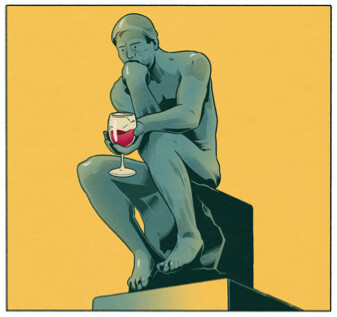
Rethinking wine means shifting from thinking about wine to thinking with wine as a relational encounter. Wine is a dialogue, a form of contact, a portal.
In calling us to our senses, wine can be a great teacher and conduit for critical thinking. It asks us to be present, to wholly attend to what’s in our glass, to where it came from, how it came to be, and how we find ourselves in the encounter. It invites us to think through our bodies and come back down to earth.
When Heidegger said that we are still not thinking, he was referring to the way modern, technological thinking enframes the world as a storehouse of resources to manipulate and control. The result is ever-deepening estrangement from the world and ourselves.
Wine, if we let it, can help restore this contact. Not by giving us data to process, but by inviting us to slow down, to be present, and to think with the world.
Meet the Author:
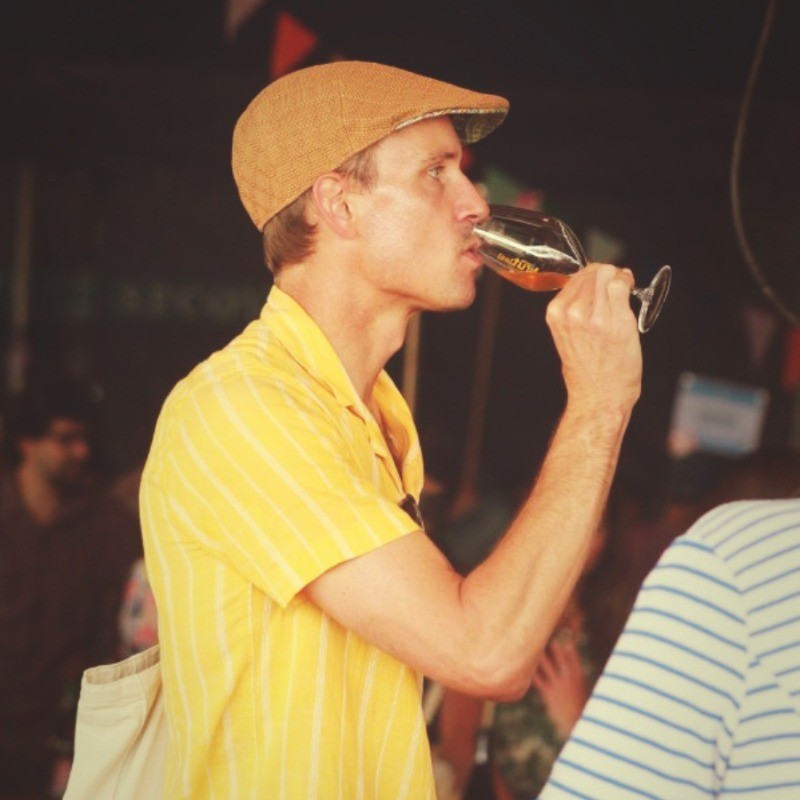
Chris Howard is an award-winning wine writer, educator, and judge based in Paris. He holds a doctorate in anthropology and worked as both an academic and OECD economist before returning to wine, his original vocation in his native Sonoma. He serves as editorial advisor for the Oxford Companion to Wine and France editor for The Somm Journal, and his writing appears in World of Fine Wine, Decanter, and JancisRobinson.com, among others. He is currently working with Wine Scholar Guild on their new Tasting Diploma, launching in 2026.