Priscilla Hennekam
Released 16 Sept, 2025
The future rarely arrives with trumpets. It does not ask permission. Instead, it slips in quietly, almost unnoticed, through a handful of lab experiments, obscure start-ups, or ideas that at first sound too far-fetched to take seriously. Then, almost overnight, those same ideas reshape entire industries and change the way we live.
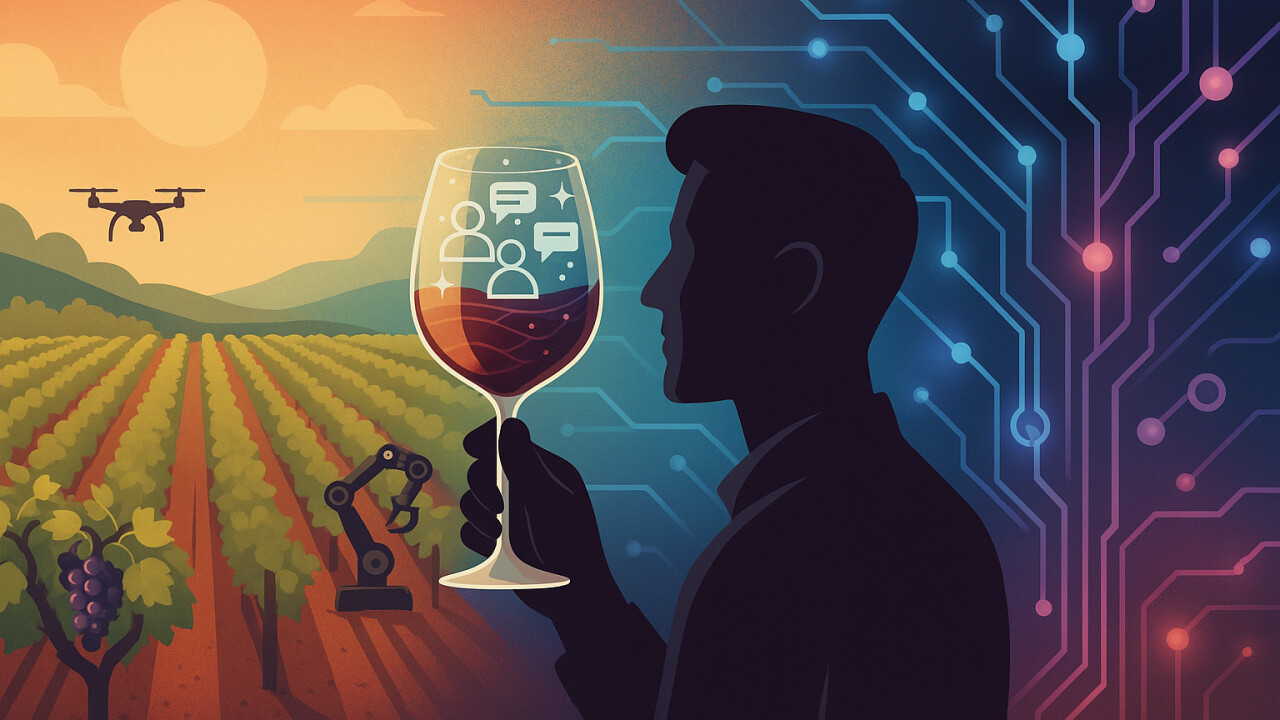
Wine, with its centuries of ritual and tradition, is not immune. In fact, its very reliance on heritage makes it especially vulnerable to disruption. What feels timeless today may, in retrospect, be the calm before a storm. Over the next decade, powerful forces - artificial intelligence, synthetic biology, decentralisation, networked economies, shifting consumer values - will collide with one of humanity’s oldest cultural products. The results will be uncomfortable, exhilarating, and unpredictable.
We are approaching an era when even the definition of “WINE” is up for debate. Will it still be a liquid born of grapes, soil, and climate? Or will it also include laboratory creations designed molecule by molecule to replicate or even surpass what vineyards can produce? Will authenticity remain rooted in terroir, or will it migrate to networks, communities, and the stories consumers tell about themselves?
The future of wine will not simply be about bottles on shelves. It will be about ecosystems, platforms, and meaning. It will test our assumptions about competition, trust, and value. And it will demand that we rethink not only how wine is made and marketed, but also what role it plays in culture, identity, and community.
Thank you, Hugh Kruzel for asking the question that inspired this newsletter.
I came to understand that the forces reshaping our world - technology, decentralisation, shifting values - would also reshape wine. And if we insisted on looking only inward, wine could slip into irrelevance for the very people it was meant to inspire.
Rethinking the Wine Industry was born from that realisation. Our purpose is to create a space that reconnects wine with the world, decentralising knowledge, breaking down barriers, and turning conversations into collective action. This is about building an industry that evolves with society rather than resists it.
To be part of the launch of rethinkingwine.app: Click here
The Technologies That Will Reshape Us
Artificial Intelligence
AI is no longer simply a tool, it has become an actor in our networks. As Yuval Harari reminds us in 'Nexus’, the story of civilisation is the story of how information flows: who controls it, how it spreads, and what decisions it enables. Until now, those flows have been mediated by human beings: critics, sommeliers, retailers, marketers.
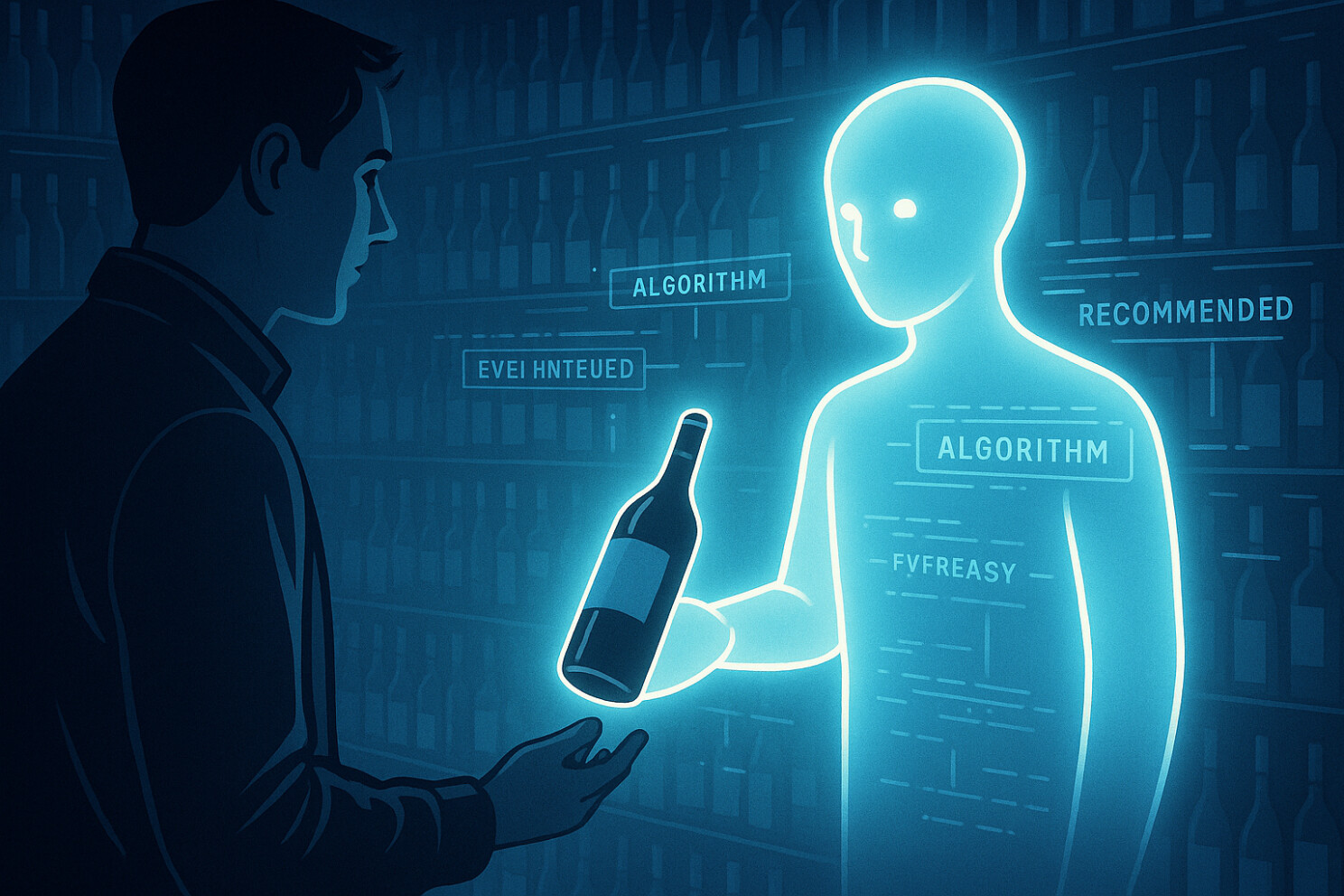
But AI is beginning to step into those roles as an active participant shaping perception and choice. Instead of reading critics or Googling, tomorrow’s consumer may ask their AI assistant, “What wine should I buy tonight?” The algorithm - not the sommelier, not the critic, not even the retailer - will answer.
Researchers Yaqub Chaudhary, and Jonnie Penn argue we are entering what they call ‘The intention economy’, a system where AI doesn’t just respond to what we want, it anticipates and pre-empts it.
For the wine world, this means that the act of choosing may no longer be an experience of human curiosity. The slow ritual of wandering through shelves, listening to the stories of producers, or asking a sommelier for guidance could give way to something far more invisible and instantaneous: a machine-mediated prediction. A digital assistant, always present and always learning, may present us with an answer before we even feel the need to ask.
This shift matters because it changes more than behaviour, it changes the nature of decision-making itself. Humans are already leaning on AI to solve problems, filter options, and decide on their behalf. From what route to take when driving, to what film to watch on a Friday night, to what news stories surface in their feeds, algorithms are already shaping the landscape of daily life. Wine will not be different. When the time comes to buy a bottle, most people will simply accept the choice served to them, optimised by a system that “knows” their patterns better than they do.
This will redefine gatekeeping, personalisation, and discovery itself. Visibility will depend less on terroir or heritage, and more on how your brand is indexed, tagged, and understood by machines. Data becomes a new form of terroir.
The opportunity is unprecedented: to reach consumers at a level of intimacy and precision unimaginable even a decade ago. But the risks are equally profound. If algorithms narrow choices to only what they “know” we like, serendipity may vanish. If AI agents become the main interface for discovery, brands may risk losing their voice entirely.
REFLECTION: In a future where machines may curate not just what we see but what we desire, what role will remain for human curiosity, storytelling, and chance?
Synthetic Biology
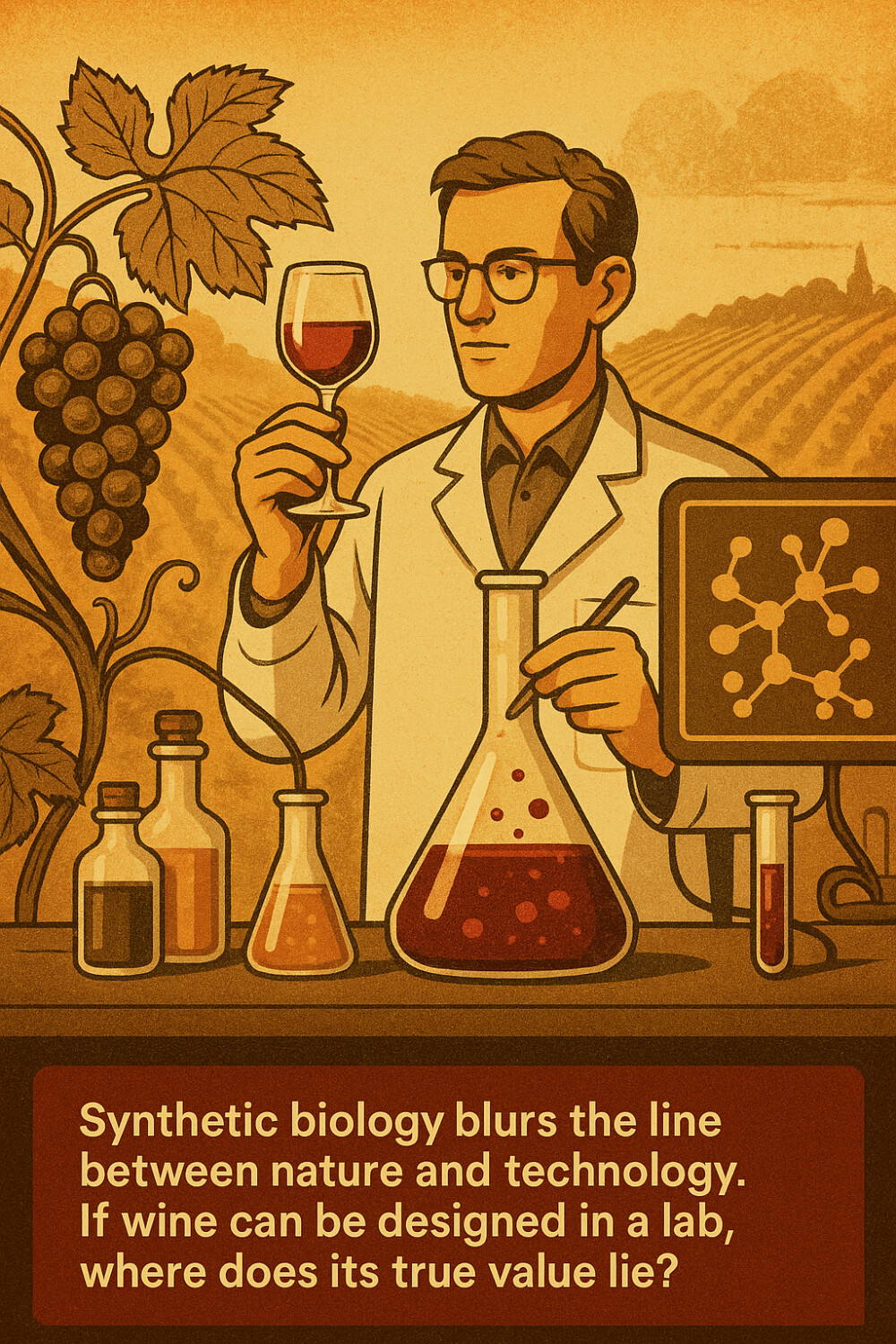
If AI changes how wine is chosen, synthetic biology may change what wine is. This field goes beyond editing DNA, it is about designing and creating new organisms to produce food, drink, and materials. For wine, that means the vineyard, once considered sacred ground, is no longer the only place where wine can be born.
Take Ava Winery, a San Francisco start-up founded in 2015. Their mission: to recreate wines “molecule by molecule”, using sugars, acids, ethanol, and flavour compounds sourced from plants other than grapes. To many, the idea sounded absurd, even heretical. To others, it looked like an “Uber-for-wine” moment: the promise of access, scale, and disruption.
On paper, the benefits are striking, a tenfold reduction in water use compared to traditional viticulture, a dramatically lower environmental footprint, and the freedom to design entirely new flavour profiles never before found in grapes.
How long before we’re "3D printing” wines at home?
This is molecular oenology. Whether it ultimately fails or succeeds, the signal is unmistakable: the boundary between the natural and the synthetic is blurring. The wine world cannot afford to look away.
We’ve seen echoes of this before. In the documentary ‘Sour Grapes’, Rudy Kurniawan fooled collectors with counterfeit bottles, replicating the chemistry of great wines closely enough to deceive even the most seasoned palates. That scandal revealed a hard truth: if wine is reduced only to what can be measured in a lab or tasted in a glass, then the line between authenticity and imitation collapses.
Synthetic biology takes this further. If all we prize in wine is technical quality, then labs may soon deliver it more efficiently, more consistently, and with fewer environmental costs.
REFLECTION: If nature itself can be engineered, will the TRUE VALUE of wine lie in a sterile ideal of quality, or in its ability to carry what no lab can reproduce: its MEANINGS, its CONNECTIONS, and its MEMORIES?
Decentralisation and the Network Economy
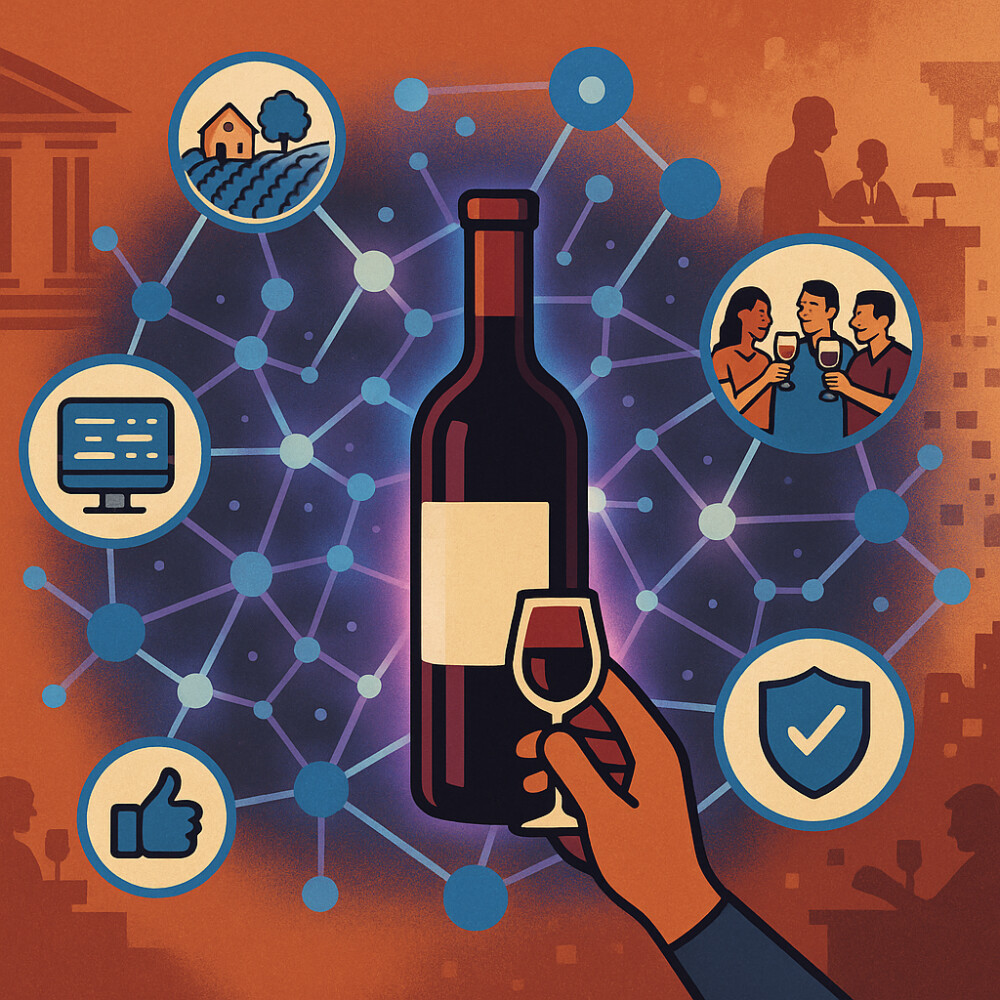
For centuries, wine has been defined by centralised institutions: appellation systems, regulatory councils, critics, competitions, retailers, and distributors. These structures gave order and authority, shaping what counted as “quality” and who had the right to define it. But those same structures also limited participation, often reinforcing hierarchies that placed producers and consumers at a distance.
In ‘The Network State’, Balaji Srinivasan argues that in the digital age, communities form first online, then manifest offline, creating their own systems of governance, trust, and even economies. Applied to wine, this signals a profound shift. Instead of a central authority dictating what qualifies as authentic, fair, or valuable, new wine communities could create peer-to-peer systems of certification and reputation. Consumers might validate a wine’s sustainability practices through blockchain ledgers, or assign credibility through decentralised review networks. The centre of gravity moves away from gatekeepers and into the hands of networks.
This isn’t just theory, it’s the logic of networks. In ‘Reshuffle’, Mansell and Steinmueller describe how the knowledge economy is being “restacked”, with power shifting to those who control flows of data and reputation. In the old world, a handful of critics and institutions concentrated knowledge and authority. In the reshuffled economy, knowledge circulates laterally through communities. A viral post, a micro-influencer, or a trusted peer group may carry more weight than an entire regulatory system. For wine, this means legitimacy will not flow top-down but sideways, through webs of relationships and trust.
Alvin Toffler’s ‘Powershift’ helps us understand why this is happening. Toffler argued that power rests on three pillars: violence, wealth, and knowledge. In the industrial age, wealth and institutional control dominated. But in the digital age, knowledge and networks become the decisive form of power. As information becomes abundant, what matters is who can make sense of it, who can mobilise it, and who can build communities around it.
The risks are real. Without shared standards, fragmentation may accelerate. Communities could splinter into echo chambers, each defining authenticity and quality in their own terms. This creates a landscape rich in diversity but fragile in coherence. Trust becomes both more important and harder to sustain.
Yet the opportunities are extraordinary. Decentralisation offers wine the chance to escape the limitations of geography and hierarchy, and to become instead a networked ecosystem where meaning is co-created. A small producer in Brazil or Georgia could reach a global audience without waiting for validation from Bordeaux or Napa. A community-driven label could gain credibility not because of a score in a magazine, but because hundreds of people within a network certify its story, values, and impact.
In this future, authority is not given once and for all, it is earned continuously, through transparency, reputation, and contribution to the network. The role of the wine professional shifts from guarding knowledge to facilitating connections, from lecturing to hosting, from protecting tradition to enabling participation.
Networks take centre stage, and with them, the chance to build a wine culture that is more open, more participatory, and more aligned with the realities of the digital age. And here is where the human dimension matters.
In ‘Unreasonable Hospitality’, Will Guidara makes a crucial distinction: a customer buys, but a guest belongs. In a decentralised, network-driven wine world, people will not be satisfied with being treated as passive buyers. They will expect to be recognised as participants, contributors, even co-creators. They won’t just purchase wine; they’ll want to help define what it means, validate its values, and share its story with their communities.
REFLECTION: If authority no longer resides in institutions but in communities, how will we define trust, quality, and belonging in wine?
Wine Marketing in the Age of Hyperreality
Jean Baudrillard warned decades ago:
“We live in a world where there is more and more information, and less and less meaning.”
In ‘Simulacra and Simulation’, he described a world of hyperreality, where the copy no longer points to reality but replaces it.
What happens when AI can generate tasting notes more persuasive than any critic, virtual reality can deliver vineyard tours more vivid than standing in the vines, or synthetic biology can replicate a great wine molecule by molecule? Do people still seek terroir and tradition? Recall the message in Yuval Harari’s 'Nexus’: history is the story of information networks.
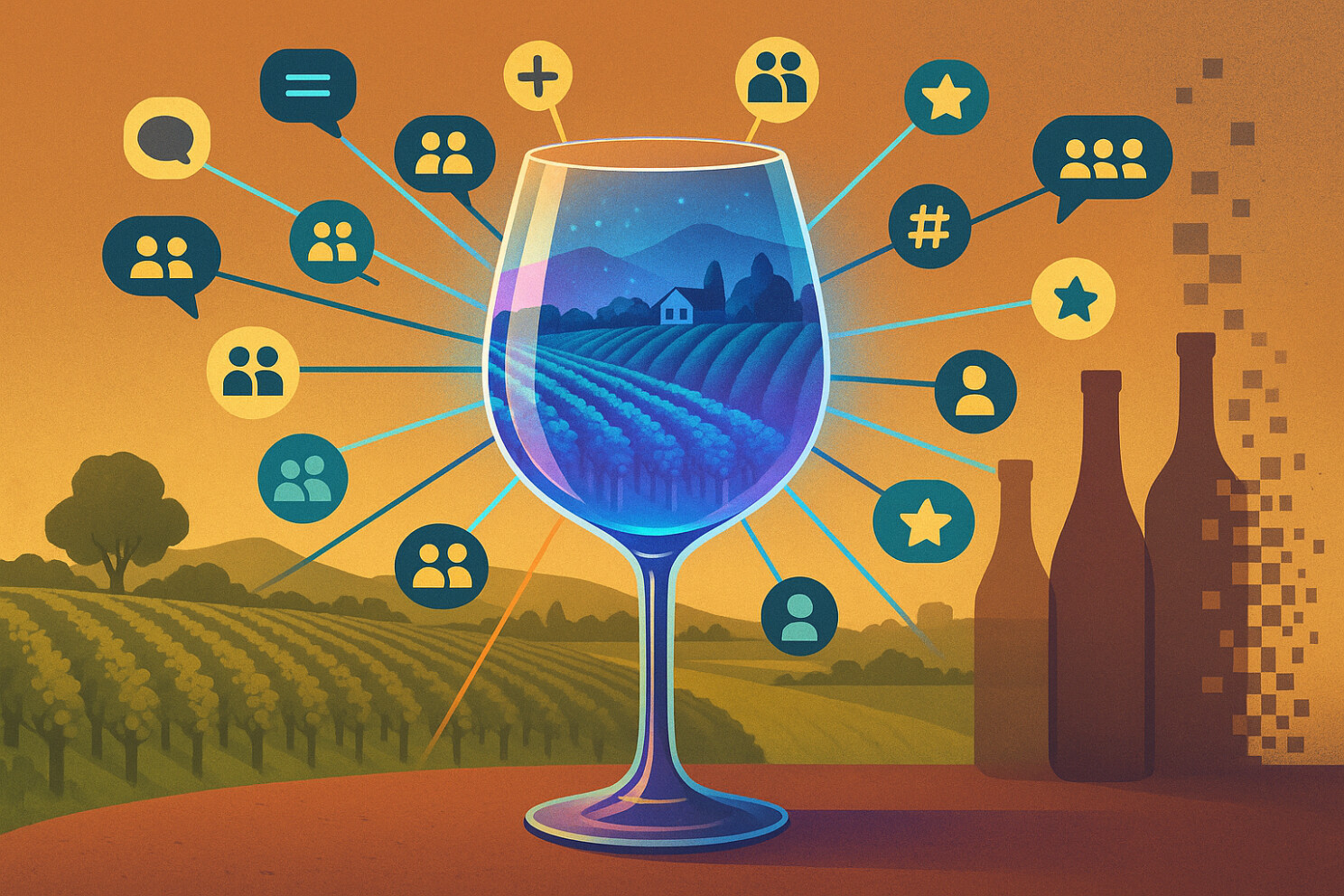
Marty Neumeier’s ‘The Brand Flip’ is blunt: “Customers now run companies”. Once, brands controlled the narrative. They spoke; consumers listened. Today, the script has flipped. Consumers define meaning. They don’t buy products; they buy identities. They don’t join mailing lists; they join tribes. And with a single post, like, or boycott, they can amplify or dismantle a brand in real time.
For wine, this flip means that the vineyard and the cellar - once seen as the essence of value - now matter less than the ecosystem of meaning around the bottle. A wine that cannot help consumers express themselves - to show who they are, what they value, who they belong with - risks irrelevance. Success in this world requires humility: brands no longer own their stories; communities do. The role of the wine company is not to control customers, but to create spaces where communities shape their own narratives, with the brand as the platform.
This erosion of meaning links directly to the end of competition as we know it. Clayton Christensen’s ‘Innovator’s Dilemma’ shows that defending markets with scale or tradition always fails. The disruptors win by changing the rules. And in the platform age, as ‘Platform Revolution’ makes clear, competition itself is no longer a zero-sum game. Platforms thrive not by crushing rivals, but by building networks.
In wine, this shift means that rivalry between regions, companies, or brands is less important than the creation of ecosystems that expand value for all participants. Verna Allee’s “Value network analysis” demonstrates that real value flows through intangible exchanges: trust, reputation, knowledge. A single region, brand, or company may survive through rivalry, but only networks can thrive in an era where power comes from connection, not control.
The Future of Jobs in Wine
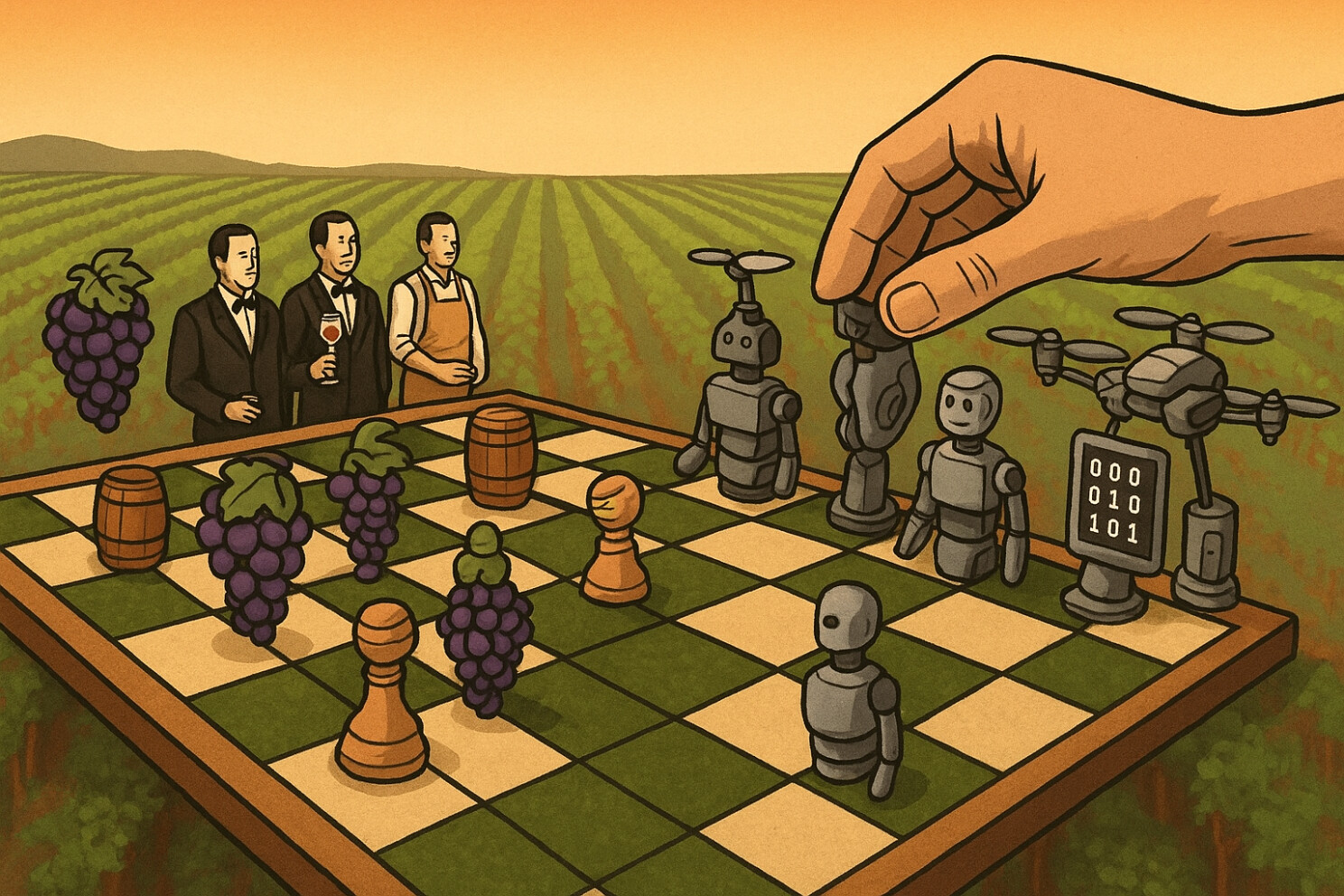
The future of work in wine will not look like the past. Roman Yampolskiy has warned that under advanced AI, as much as 99% of jobs could disappear. His point is stark: anything that is repeatable, predictable, and optimisable will eventually be automated. Machines prune vines more precisely than people. Drones map vineyards faster than surveyors. Algorithms predict yields better than intuition. Even the work of sommeliers- curating, recommending, pairing - is already being mimicked by AI assistants.
Mo Gawdat, in ‘Scary Smart’, echoes this urgency. He reminds us that AI is not some distant possibility but a present force that will learn faster than we can regulate it. The question is not if it will reshape work, but how quickly, and whether we are prepared.
Ray Dalio adds another dimension. In ‘Principles for Dealing with the Changing World Order’, he reminds us that history moves in cycles. Systems collapse not because people fail to work hard, but because they fail to adapt when the rules of the game change. The wine industry has long assumed that the hierarchy of jobs, growers, makers, sellers, storytellers, would remain stable. But Dalio would argue that the cycle is turning. Old strengths become new vulnerabilities when the environment shifts. Efficiency, once the guarantee of survival, becomes irrelevant in an age when machines do it better.
So what might this mean in practice?
Some jobs will disappear entirely, their tasks swallowed by automation. Others will transform, blending human intuition with machine precision in ways we are only beginning to imagine. And entirely new roles will emerge, roles we don’t yet have language for, at the edges - where technology, culture, and human experience intersect.
The harder question is not technical but psychological. Are we ready mentally, emotionally, and culturally, for this? Are we prepared to let go of work we once thought essential, to redefine our identity when the very skills that gave us status and security are no longer scarce?
The wine industry is facing a global identity crisis. The world is changing at an unprecedented pace. Technology, shifting cultural values, climate pressures, and globalisation are transforming how people learn, work, and connect. Other industries are adapting quickly with digital platforms, collaboration hubs, and consumer-centric approaches. The wine sector, however, remains fragmented; many are resistant to change, while others may be more willing but face obstacles including, but not limited to, time or financial constraints, lack the required skills and/or hesitate due to inherent risks in the nature of the industry (e.g. one harvest per year). This disconnect threatens both consumer demand and the sustainability of the industry’s future.
But this isn’t just about the workforce. These changes will alter how consumers experience wine. Imagine walking into a shop in 2035. Instead of browsing shelves or asking a sommelier, you might ask your AI assistant, “What wine fits tonight’s dinner, my mood, and my budget?” The cellar door staff of the future may look less like sellers and more like community hosts, helping visitors feel they belong to a story larger than themselves.
The dilemma is clear. Automation will reduce the need for many traditional roles. But it will also elevate the importance of the roles that remain. The wine professional of tomorrow may not be the encyclopaedic expert, but the host who creates belonging. Not the marketer who controls the message, but the curator who facilitates stories communities want to tell. Not the competitor guarding turf, but the collaborator building networks.
And for consumers, the question will shift too. In a world where AI can predict your taste better than you can articulate it, the value of wine may lie less in discovery and more in meaning. Less in the product itself, and more in the experience it enables.
REFLECTION: As automation accelerates, will the wine industry sleepwalk into obsolescence, or will it seize this moment to redefine both work and experience around the things no machine can ever replicate: meaning, connection, and the human need to belong?
Cycles, Adaptation, and the Wine World
“The biggest mistake people make”, Dalio writes, “is to assume that things that haven’t happened recently won’t happen at all.”
This applies directly to wine. For decades, we assumed the structures sustaining the industry -appellations, distributors, critics, rituals - would remain stable.
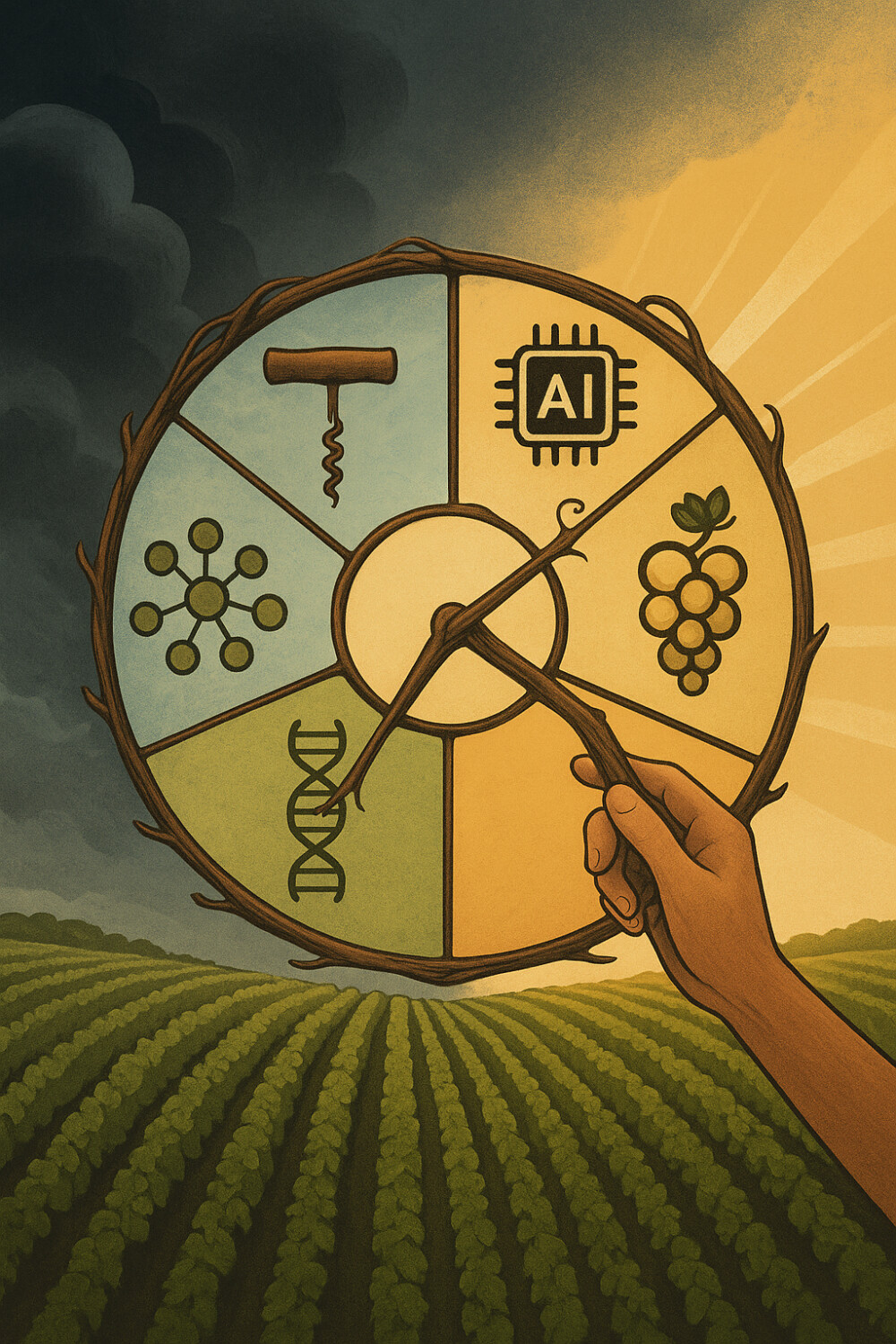
Just as nations evolve through debt cycles, power cycles, and technology cycles, so too must wine adapt through cultural and generational cycles. Today’s cycle is defined by AI, decentralisation, synthetic biology, and the network economy. The question is not whether these forces will reshape wine, but how quickly we are willing to adjust our principles to them.
Dalio emphasises radical transparency and the courage to confront reality, no matter how uncomfortable. For wine, this means acknowledging truths we may prefer to ignore: younger generations are disengaging, traditional gatekeepers no longer hold authority, and technology is transforming not only how wine is sold but what it is. Pretending otherwise is like ignoring storm clouds on the horizon.
Yet Dalio is not fatalistic. He believes that those who study cycles, accept change, and build flexible systems can survive and thrive. The lesson for wine is the same: we must stop clinging to what worked yesterday and begin designing for tomorrow. That means building networks, embracing platforms, empowering communities, and above all, creating meaning in a world where algorithms and simulations threaten to hollow it out.
Alvin Toffler put it succinctly:
“The illiterate of the 21st century will not be those who cannot read and write, but those who cannot learn, unlearn, and relearn.”
For wine, the imperative is clear. We must unlearn the assumption that heritage alone guarantees value. We must relearn how to connect, collaborate, and create meaning in a world where power has shifted to networks and platforms, where biology is programmable, and where trust is both more fragile and more valuable than ever.
The future is already here. The question is whether we will shape it, or be surprised by it.
I hope this piece sparks reflection, raises new questions, and inspires you to imagine a wine industry less focused on protecting the past and more committed to thriving in a world of constant evolution. This was a long newsletter, an attempt to connect ideas, find patterns, and share the thinkers who push my mind to “workout” every day.
These thoughts are only a beginning. I want to keep pushing, testing, and progressing them, together. If this resonates with you, I’d love to hear from you. Send me an email, let’s connect, or join our community by leaving your details and becoming part of our platform. The future of wine will be shaped not by one voice, but by many. Ready to be part of what comes next? Join us at rethinkingwine.app
References & Inspirations
-
Yuval Noah Harari, Nexus: A Brief History of Information Networks
-
Robin Mansell & W. Edward Steinmueller, Reshuffle: Who Wins When AI Restacks the Knowledge Economy
-
Marty Neumeier, The Brand Flip
-
Geoffrey G. Parker , Marshall W. Van Alstyne , Sangeet Paul Choudary, Platform Revolution
-
Clayton Christensen, The Innovator’s Dilemma
-
Alvin Toffler, The Third Wave
-
Alvin & Heidi Toffler, Powershift
-
Balaji Srinivasan, The Network State
-
Verna Allee, The Future of Knowledge: Increasing Prosperity through Value Networks
-
Jean Baudrillard, Simulacra and Simulation
-
David Williams, “Uber for Wine—and All Without Grapes” (The Guardian) - https://www.theguardian.com/lifeandstyle/2017/may/21/uber-for-wine-ava-winery-without-grapes
-
Yaqub Chaudhary & Jonnie Penn, Beware the Intention Economy: Collection and Commodification of Intent via Large Language Models (Harvard Data Science Review) - https://share.google/IqzswmeOlKrBvIONs
-
Marty Neumeier, The Brand Flip
-
Jean Baudrillard, Simulacra and Simulation
-
Ray Dalio, Principles for Dealing with the Changing World Order
-
Will Guidara, Unreasonable Hospitality